Distilling Enzyme Supplier for Spirit Production
Enzymeedge supports beverage alcohol distilleries with enzyme programs built for practical plant-floor outcomes: faster mash handling, reliable starch conversion, improved fermentability, controlled viscosity, and cleaner downstream separations.
If you are comparing a distilling enzyme supplier for spirit production, the decision should not start with a product name. It should start with your grain bill, cook profile, mash solids, fermentation target, equipment limits, and the consistency you need from batch to batch, which is where our quote conversation with distilleries, contract distillers and resellers begins.
Wholesale and bulk supply, quoted per order. For distilleries, contract distillers, manufacturers, resellers and distributors. Send us the product or process step, the quantity and the delivery destination.
Enzyme sourcing for production realities, not catalog browsing
Distilleries rarely buy enzymes for one isolated reaction. They buy process confidence.
A strong supplier should help you answer questions like:
- Will the mash move cleanly through pumps, heat exchangers, and transfer lines?
- Will starch conversion support the fermentability required for the target alcohol yield?
- Will viscosity stay controlled as grain bills, adjuncts, or seasonal raw materials shift?
- Will the enzyme program fit the existing cook, liquefaction, saccharification, and fermentation workflow?
- Will documentation, packaging, lead time, and lot consistency support uninterrupted production?
Enzymeedge approaches enzyme supply as a production input, not a commodity add-on.
Core enzyme classes for spirit production
Alpha amylase for liquefaction and viscosity reduction
Alpha amylase is commonly used during liquefaction to break down gelatinized starch into shorter dextrins. In plant terms, that means mash that can become easier to agitate, pump, heat, cool, and transfer.
For production managers, the practical value is not theoretical conversion. It is reduced handling resistance, steadier cook performance, and fewer viscosity-driven bottlenecks through the front end of the process.
Glucoamylase for fermentable sugar release
Glucoamylase supports saccharification by converting dextrins into fermentable glucose. In spirit production, this step has a direct relationship with fermentation performance and alcohol yield potential.
The right glucoamylase selection should match the process window, grain bill, fermentation conditions, and desired residual carbohydrate profile. The goal is consistent fermentability without forcing unnecessary process changes.
Pullulanase for debranching and deeper conversion
Pullulanase can be used to help debranch starch structures that are less accessible to glucoamylase alone. For certain mashes, grain blends, or high-solids operations, this can support more complete carbohydrate utilization and help reduce residual dextrin drag.
Pullulanase is not always the first enzyme a distillery evaluates, but it can be important when the objective is tighter conversion, better consistency, or improved performance from challenging raw materials.
Where the right enzyme program shows up in the plant
A well-matched enzyme program can affect several measurable operating areas:
- Mash viscosity control: smoother agitation, transfer, and heat exchange behavior
- Conversion consistency: more predictable starch breakdown across raw material variation
- Fermentability: better alignment between sugar profile and fermentation target
- Run time stability: fewer slowdowns caused by thick mash, incomplete conversion, or handling issues
- Separation behavior: cleaner downstream handling when residual solids and viscosity are better controlled
- Batch-to-batch repeatability: tighter operating windows across production schedules
These outcomes depend on process fit. Enzymeedge helps buyers evaluate enzymes against real operating conditions rather than generic claims.
What to define before requesting a quote
To specify the right alpha amylase, glucoamylase, pullulanase, or blended program, procurement and production teams should align on the following details:
- Raw materials — corn, wheat, rye, barley, sorghum, rice, malted inputs, adjuncts, or mixed grain bills
- Mash solids and viscosity challenges — current handling limits, pump restrictions, transfer times, and agitation concerns
- Cook and liquefaction profile — temperature exposure, hold times, pH range, and equipment configuration
- Saccharification and fermentation approach — separate saccharification, simultaneous saccharification and fermentation, or hybrid workflow
- Yield and consistency targets — practical performance goals based on current plant data
- Downstream constraints — still feed behavior, centrifugation, filtration, or solids management issues
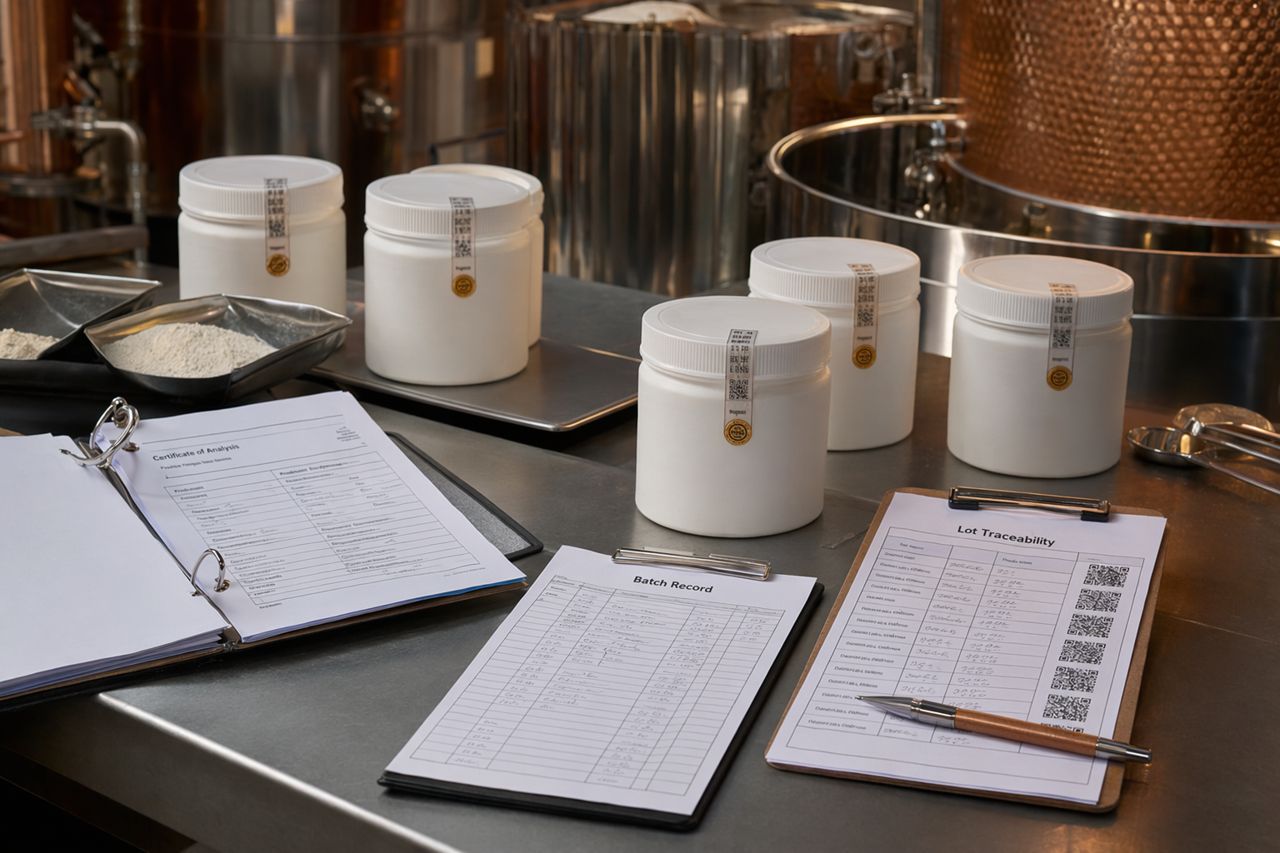
- Documentation needs — certificate of analysis, lot traceability, regulatory support, allergen statements, and handling guidance
- Packaging and logistics — order volume, storage conditions, delivery schedule, and site receiving requirements
The more clearly these inputs are defined, the faster a supplier can recommend a fit-for-purpose enzyme option.
Procurement criteria for a distilling enzyme supplier
When qualifying a supplier, look beyond price per container. Distilling enzymes influence production economics through yield, throughput, stability, and rework avoidance.
Technical fit
A supplier should understand mash conversion, fermentability, viscosity control, and separation behavior in the context of beverage alcohol production. They should be able to discuss how enzyme class, process timing, and operating conditions affect your plant.
Lot consistency
Enzyme performance must be dependable from order to order. Ask about lot control, retained documentation, shelf-life guidance, and packaging consistency.
Practical implementation support
A good supplier helps you move from lab evaluation to plant use with clear handling guidance, trial structure, and observation points. The goal is a controlled change, not guesswork at production scale.
Documentation readiness
Procurement teams need clean documentation for quality, compliance, and internal approval. Enzymeedge can support buyer review with product documentation aligned to industrial purchasing workflows.
Responsive quoting
For operating plants, response time matters. A quote should be based on the actual use case, expected volume, packaging needs, and delivery schedule.
A practical evaluation path
Enzymeedge recommends a controlled evaluation path for most distillery enzyme projects:
- Define the process target — lower viscosity, stronger conversion, improved fermentability, cleaner separation, or better consistency
- Review plant conditions — grain bill, cook profile, pH range, temperature exposure, and fermentation workflow
- Select candidate enzyme classes — alpha amylase, glucoamylase, pullulanase, or a coordinated program
- Run a structured trial — compare against current operation using plant-relevant observations
- Confirm handling and documentation — packaging, storage, safety, lot traceability, and internal approval needs
- Move to production supply — quote, scheduling, and repeat-order planning
Built for beverage alcohol distilleries
Enzymeedge serves beverage alcohol producers that need technically fluent enzyme supply without unnecessary noise. The focus is simple: support the production team with enzymes that fit the process and help procurement buy with confidence.
Use us when you need:
- Alpha amylase for liquefaction and mash handling
- Glucoamylase for fermentable sugar development
- Pullulanase for debranching support and deeper conversion strategies
- Enzyme program guidance for grain-based spirit production
- Reliable documentation, packaging, and quote support
Request a quote
Tell us what you are making, what your mash is doing, and what outcome you need to improve. Enzymeedge will review the process requirements and respond with a practical enzyme supply recommendation.
Request a quote using the on-site form
Helpful details to include
- Grain bill and raw material mix
- Current mash solids or viscosity concern
- Cook, liquefaction, and fermentation workflow
- Desired process outcome
- Estimated monthly or annual enzyme demand
- Packaging preference and delivery location
- Documentation requirements for purchasing or quality review
FAQ
Do you supply single enzymes or coordinated enzyme programs?
Both. Some plants need a single alpha amylase, glucoamylase, or pullulanase input. Others benefit from a coordinated program designed around liquefaction, saccharification, and fermentation goals.
Can you help if our main problem is thick mash?
Yes. Thick mash can create transfer delays, agitation problems, and heat exchange inefficiency. Alpha amylase selection and process timing are often central to viscosity control, but the full recommendation depends on the grain bill and cook profile.
Can enzymes improve alcohol yield?
Enzymes can support yield potential by improving starch conversion and fermentable sugar availability. Actual results depend on raw materials, process conditions, fermentation health, and plant execution.
Is pullulanase required for every distillery?
No. Pullulanase is useful in specific conversion strategies, especially where debranching can support deeper starch utilization. Enzymeedge can help determine whether it belongs in your process.
How do we start?
Use the on-site request a quote form with your process details. We will review the application and respond with a fit-based recommendation.