Distillery Starch Conversion Enzyme Buying Guide
Every point of starch that is not converted before the yeast takes over is alcohol your distillery paid for in grain and never collected at the still. For a grain spirit plant, starch conversion decides mash viscosity, pumpability, fermentable sugar, fermentation pace and, in the end, litres of alcohol per tonne of grain.
This guide is written for production managers, plant owners and purchasing teams at distilleries, contract distillers and the distributors who supply them. It covers where yield is usually lost, which enzyme roles close each gap, and what to send us so we can quote the right program.
Where alcohol yield is lost before the still
Alcohol yield is one of the plainest measures of a distillery's efficiency and margin: raising it saves raw material cost and makes the product more competitive. In practice the losses sit in a handful of places, and only some of them are enzyme problems. A good supplier conversation starts by separating the two.
1. Grain condition at intake
Yield potential is set by the starch and sugar content of the grain, so plump, fully mature sorghum, corn, rice or wheat gives conversion more to work with. Stale or mouldy grain lowers saccharification efficiency and weakens the yeast, which leads to incomplete fermentation and a lower alcohol yield. Grain should also be cleaned of dust, grit and foreign matter so it does not carry off-flavours or contaminating microbes into the fermenter.
No enzyme dose fully rescues spoiled grain. If conversion drops right after a new grain delivery, check the lot before you change the enzyme.
2. The saccharification window
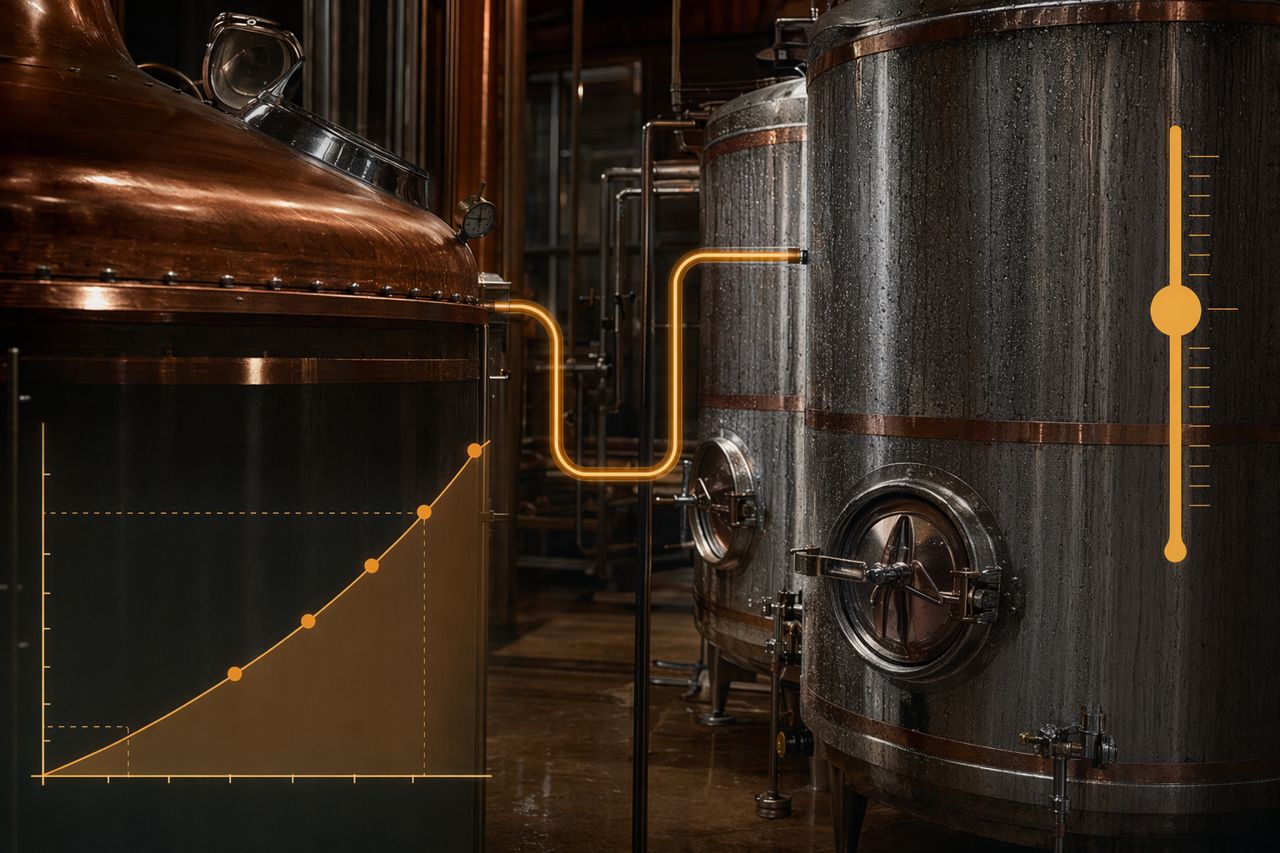
Saccharification is the step that turns starch into fermentable sugar. It is commonly held at 60-65 °C for 2-3 hours. Run it too hot and the enzyme activity is damaged; run it too cool and conversion stays incomplete, so less sugar reaches the yeast.
Traditional grain starters carry their own amylase and saccharifying enzymes. Modern plants add industrial enzyme preparations on top to raise starch conversion. In both cases the dose and the moment of addition need tight control, so the enzyme is not added where its activity will be lost.
3. Fermentation conditions
Most distilling yeasts ferment best at 25-30 °C; hotter kills yeast, cooler slows fermentation down. Holding the pH at 4.0-5.0 helps the yeast grow and keeps contaminating bacteria back. A fermentation cycle of 5-7 days is typical, adjusted to the plant. Too short, and sugar is left unconverted; too long, and alcohol can be oxidised or consumed by contaminants.
Yeast choice matters as much as enzyme choice: strains with high alcohol output and good tolerance of heat and alcohol lift fermentation efficiency noticeably, and yeast should be activated before pitching.
4. Equipment losses
Fermenters that seal well stop contamination and alcohol evaporation. At the still, efficient equipment and a controlled distillation temperature and speed recover more of the alcohol in the beer; running too fast leaves alcohol behind.
5. Spent grain and by-products
Spent grain still holds some sugar and nutrients. Plants re-ferment it for a second run or sell it as feed or fertiliser, and larger plants recover residual alcohol from the fermented liquid with membrane or extraction steps. These are yield gains that sit outside the enzyme budget but belong in the same yield review.
6. Batch records
Plants that improve yield steadily record every batch: grain lot, yeast, temperatures and times. Those records are also what lets an enzyme supplier tell a grain problem from an enzyme problem.
Symptom, likely cause and what to ask your supplier
| What you see on the floor | Likely cause | What to ask the enzyme supplier |
|---|---|---|
| Conversion drops right after a new grain delivery | Grain condition (stale, mouldy or low-starch lot) | Whether a dose change makes sense at all, or whether the lot should be checked first |
| Sugar left in the beer at the end of fermentation | Saccharification too short, too cool or dosed at the wrong moment | Which saccharification product fits your hold time and temperature, and where to add it |
| Thick mash, slow transfers, strained pumps | Liquefaction not keeping up with solids level or grain bill | A liquefaction product matched to your cook temperature and solids |
| Fermentation stalls or runs long | Yeast stress, temperature or pH outside range, or low fermentable sugar | Whether the problem is sugar supply (enzyme) or yeast conditions (process) |
| Results drift from batch to batch | Missing records, mixed grain lots, inconsistent dosing | Lot-to-lot consistency of the enzyme and clear handling guidance |
The three core enzyme roles in distillery starch conversion
Most beverage alcohol starch-conversion programs are built around three functional roles.
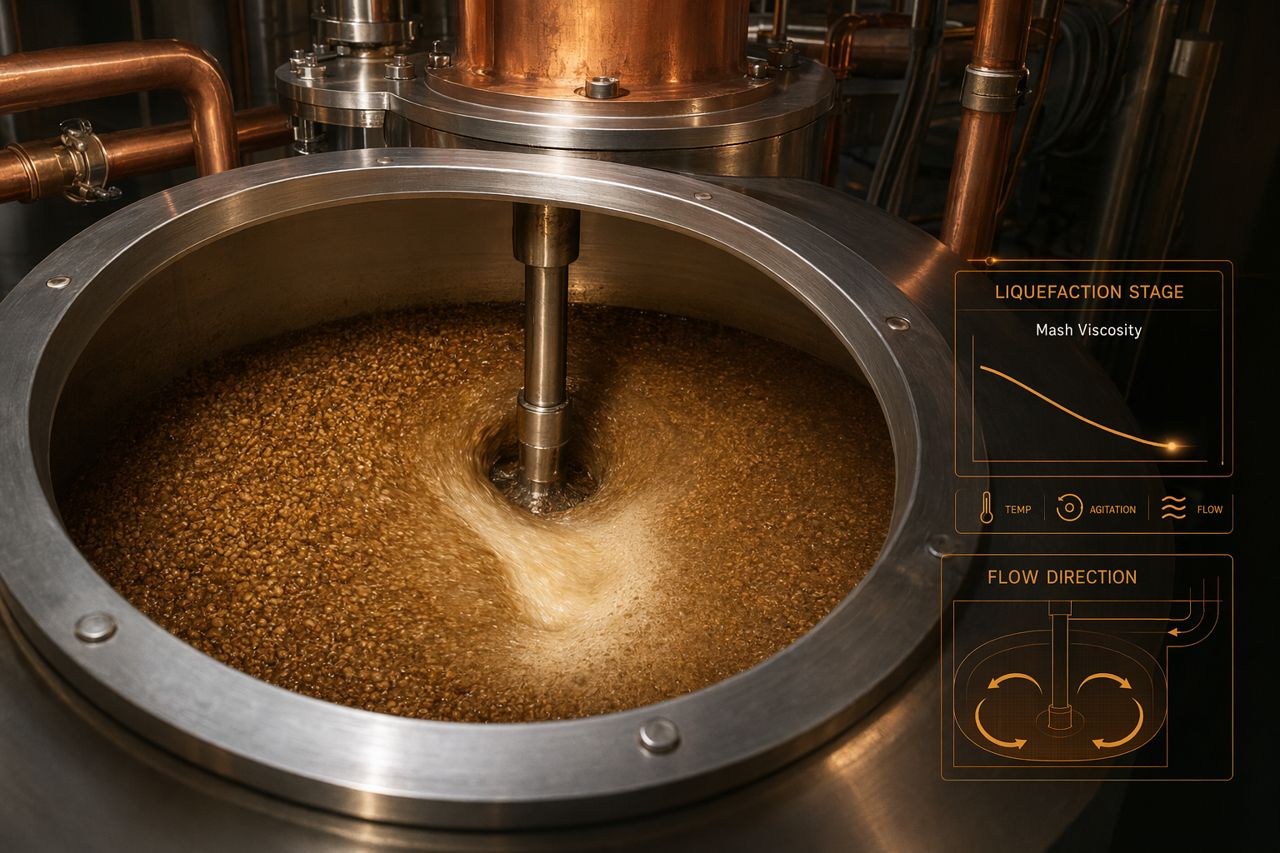
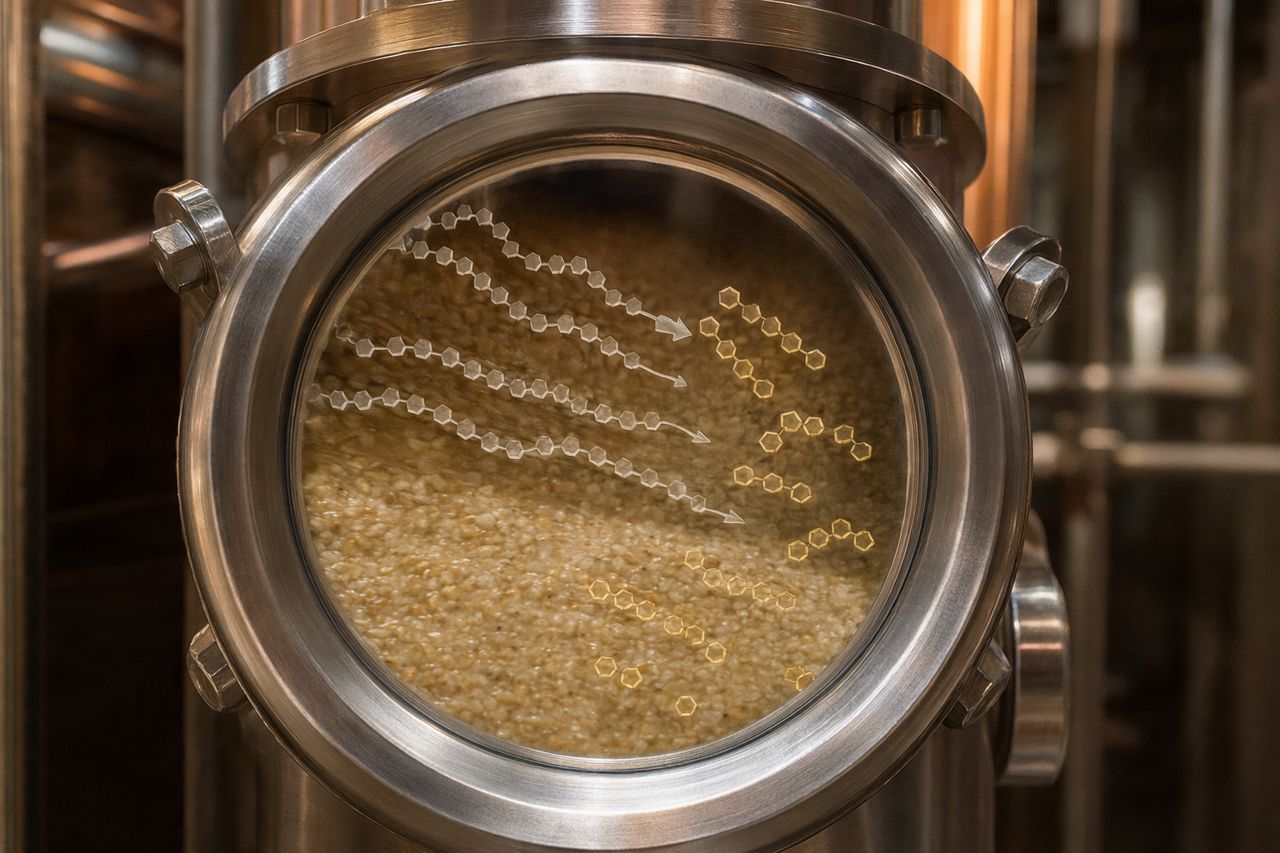
Alpha amylase: liquefaction and viscosity control
Alpha amylase breaks long starch chains into shorter dextrins early in the process. On the floor that means mash that thins faster during and after cooking, agitates and transfers more easily, and stays pumpable at higher solids. The buying question is whether a given product works under your temperature profile, pH, grain bill, solids level and residence time.
Glucoamylase: fermentable sugar release
Glucoamylase converts dextrins into fermentable sugar for the yeast. It is central to extract use and to fermentation completion. Match it to your saccharification hold, fermentation window and yeast plan, so that sugar arrives when the yeast can use it.
Pullulanase: debranching support
Pullulanase targets branched starch structures that can limit complete conversion. It is not needed in every plant, but it earns its place when residual dextrins stay stubborn because of branching, high solids or variable grain.
How to choose: a short selection list
- Fix the grain first. Confirm grain condition and cleaning before changing enzymes.
- Map your temperatures. Give the supplier your cook, saccharification and fermentation temperatures and times; product choice follows from them.
- Name the main goal. Yield, run time, viscosity control or consistency: one primary goal keeps the program simple.
- Decide the addition points. Agree where each enzyme goes in, so activity is not lost to heat or timing.
- Trial against your records. Compare against recorded batches with the same grain lot, not against memory.
- Confirm supply terms. Pack format, storage, documentation and repeat-order planning, quoted per order.
Common mistakes we see
- Changing the enzyme when the real problem is a stale or mouldy grain lot.
- Holding saccharification too hot to "speed it up", which damages the enzyme instead.
- Shortening fermentation to free tanks and leaving sugar unconverted.
- Comparing products without batch records, so grain and enzyme effects get mixed up.
What to share when requesting a quote
To help Enzymeedge recommend the right enzyme approach, include as much of the following as possible:
- Grain bill and target spirits category
- Milling and mash preparation method
- Solids loading or mash thickness target
- Cook, saccharification and fermentation temperatures and times
- pH range through liquefaction and fermentation
- Current viscosity, pumpability, or transfer concerns
- Current enzyme roles used, if any
- Main goal: yield, run time, consistency, viscosity control, or troubleshooting
Request a quote: wholesale and bulk supply
Enzymeedge supplies starch-conversion enzymes in wholesale and bulk quantities to distilleries, contract distillers, manufacturers, resellers and distributors. Pricing, pack format and delivery are quoted per order.
Send us three things to start: the product or process step, the quantity and the destination. Add your process details above and we will map the right alpha amylase, glucoamylase and pullulanase strategy for your operation.